 Auto BeatFlow
Royalty-Free AI Music: What You Can Actually Use
What "royalty-free" really means for AI-generated music: commercial licenses, the generation-timestamp rule, YouTube Content ID, streaming releases, and the records to keep.

You generated an impressive audio track for a client campaign, a monetized YouTube video, or an indie game. It sounds commercially produced, fits your scene seamlessly, and took only minutes to render.
Before hitting publish, however, a critical legal question arises: Can you legally monetize this music, or are you walking into Content ID strikes and copyright infringement claims?
The legal landscape surrounding synthetic media moves fast, but practical monetization comes down to platform licensing agreements, copyright law boundaries, and chain-of-title documentation.
Here is what "royalty-free" actually means in the context of AI audio, how commercial rights work, and how to protect your projects from unexpected disputes.
1. Deconstructing the Terminology: What Does "Royalty-Free" Really Mean?
A frequent misunderstanding online is treating "royalty-free," "copyright-free," and "commercial rights" as interchangeable concepts. Legally, they represent distinct tiers of usage permissions:
| License Type | Master Ownership | Recurring Royalties | Practical Scope for Creators |
|---|---|---|---|
| Royalty-Free (RF) | The platform or original rightsholder maintains master ownership. | None. You pay once (or pay via an active subscription tier). | You can use the track across permitted media without paying percentages on sales or ad impressions. |
| Copyright-Free (Public Domain) | No entity holds an exclusive copyright claim (e.g., Creative Commons CC0 or expired terms). | None. | Anyone can copy, sample, remix, or resell the asset without restrictions. Raw AI generations rarely qualify as public domain. |
| Commercial License | Contractual grant issued by the service provider. | Defined by plan terms. | Explicitly permits the user to deploy the audio in revenue-generating environments (broadcast, paid ads, client deliverables). |
Most commercial AI generation platforms operate under a royalty-free commercial licensing model. You keep 100% of your project's revenue without owing ongoing backend fees, but your usage remains governed by the specific terms of the tool you used.
2. The "Timestamp Rule": The Most Common Licensing Pitfall
Many creators make the mistake of generating dozens of tracks under a platform’s free tier, testing them in a video edit, and upgrading to a paid subscription only when the project is ready for release.
Under the terms of service of nearly all major audio synthesis providers, commercial rights attach to the asset at the exact timestamp of generation:
- Generated Under a Free/Trial Tier: The resulting audio file is typically granted under a non-commercial, personal-evaluation license. Upgrading your account later rarely applies commercial clearance retroactively to previously rendered assets.
- Generated Under an Active Commercial Tier: The asset receives full commercial clearance at generation, which generally remains valid perpetually for that specific exported project, even if you cancel your subscription down the road.
Best Practice: Always render your final master tracks while your account holds an active commercial plan. For instance, creating assets inside Auto BeatFlow's commercial tier ensures your audio deliverables carry certified commercial rights from the moment they are generated.
3. YouTube Content ID: Monetizing vs. Registering
Can you use AI background music on YouTube? Yes.
Can you register an AI track into YouTube's automated Content ID system to collect ad revenue from others? Almost certainly no.
Here is the operational reality behind this distinction:
- Latent Space Overlap: AI music models generate audio probabilistically based on vast training corpuses. Two creators prompting for similar genres may end up with harmonic progressions and acoustic textures that share nearly identical mathematical signatures.
- False Copyright Strikes: If an individual user enrolls a raw AI-generated audio file into Content ID, the automated fingerprint engine will inevitably flag innocent videos across the internet that used similar AI-generated tracks.
- Distributor Bans: Digital music aggregators (such as DistroKid, CD Baby, or TuneCore) strictly forbid users from submitting unedited AI tracks to Content ID registries. Violating this policy can lead to immediate catalog takedowns and account termination.
You can safely monetize your own videos containing commercially cleared AI audio. Simply ensure that neither you nor your distribution partners attempt to claim automated fingerprint exclusivity over the raw track.
4. Releasing AI Music on Spotify, Apple Music, and Streaming Catalogs
If your goal is to publish standalone AI-generated music as an artist on streaming platforms, standard intake requirements apply:
- Mass-Spam Filters: Streaming distributors actively purge automated bulk uploads (e.g., uploading 100 near-identical Lo-Fi background tracks in one day) to protect playlist algorithms from synthetic spam.
- Demonstrated Human Authorship: Platforms increasingly demand proof of genuine human creative intervention—such as original lyricism, custom vocal tracking, unique arrangement editing, or multi-track stem mixing—before approving artist payouts.
- Metadata Accuracy: Always adhere to distributor guidelines regarding synthetic audio disclosures during the release ingestion process.
5. The Audit Defense Checklist: Protecting Your Deliverables
If a client, client's legal team, or social platform ever questions the provenance of an audio track in your campaign, having immediate verification prevents project delays.
Always archive these three verification assets:
- The Generation Project Record: Keep a direct link or project identifier from your generation history.
- The License Invoice: Maintain a PDF receipt showing your active commercial subscription on the date the track was rendered.
- Platform Terms of Service: Retain an archived snapshot of the provider's licensing terms active at that time.
When managing client projects or commercial broadcasts, generating via verified platforms like Auto BeatFlow provides clear, documented commercial clearance, allowing you to deploy professional audio without intellectual property friction.
Related articles

Acoustic Guitar Resonance and String Squeaks: Synthesizing Organic Mid-Frequencies Without Plasticity
Learn how to eliminate plastic mid-range frequencies in synthetic acoustic guitar by modeling wood chamber resonance and natural fret squeaks.
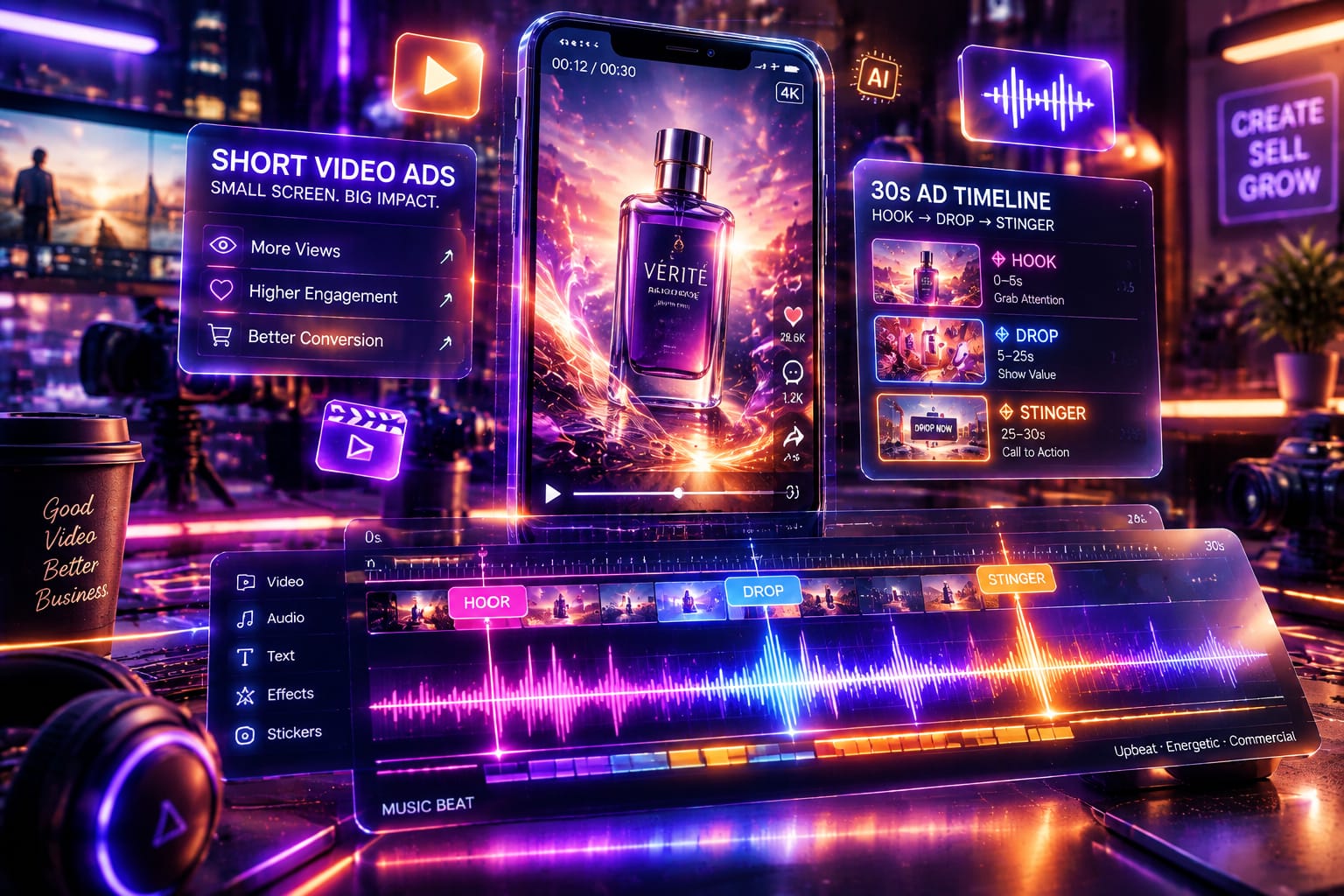
AI Music for Ads: Create Commercial Tracks in Minutes
Score 30-second ads with AI: hook in 3 seconds, leave a clean voiceover pocket, land the button ending, and spin up A/B music variants with tested prompts for SaaS, DTC and luxury brands.

Creating Calm Meditation Music with AI
Make AI meditation, sleep and breathwork tracks that actually calm listeners: beatless prompts, suspended harmony, tested prompt blueprints, 432 Hz framing and seamless 60-minute assembly.